


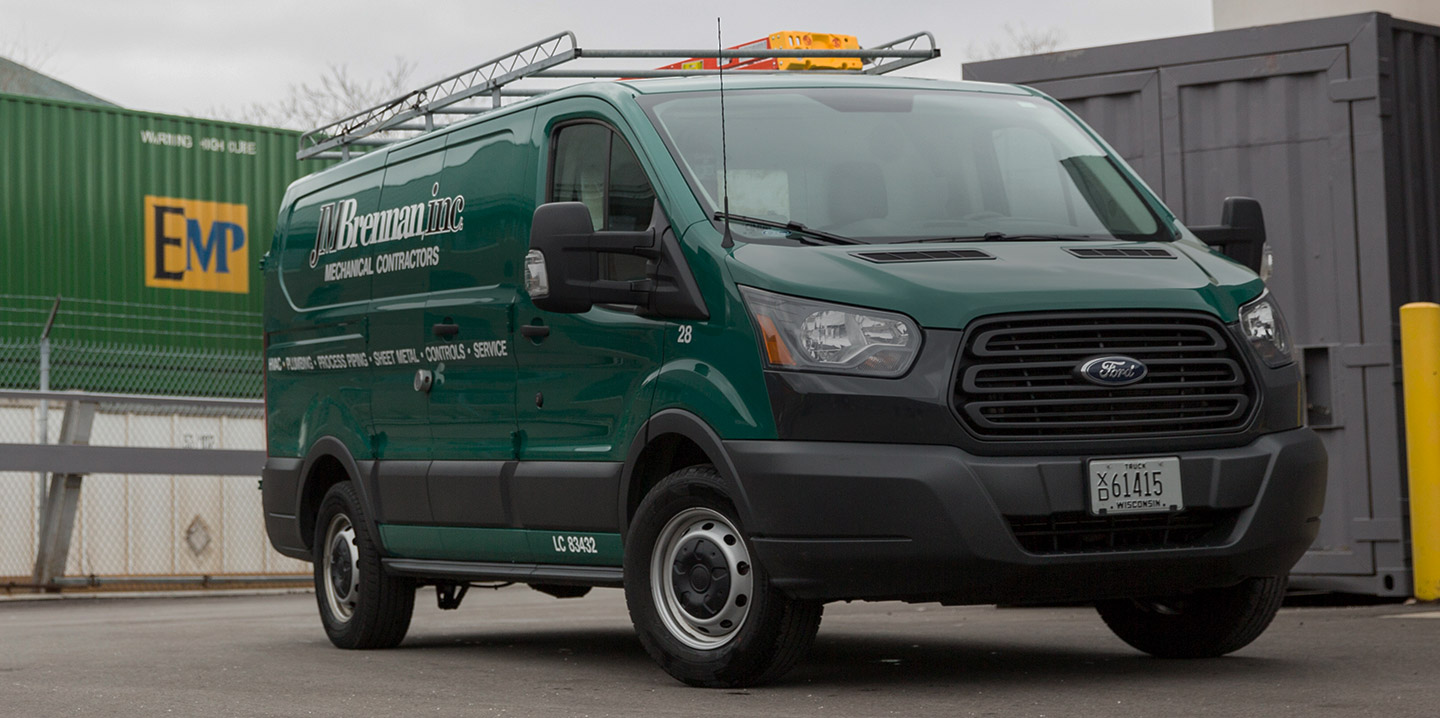
After 90 years serving Milwaukee’s hospitals, universities and manufacturers, J.M. Brennan’s manual workflows were finally catching up to them. Field crews managed multiple vendor accounts, orders were manually entered (and reentered), and dimension errors weren’t caught until it was too late.
With BuildCentrix, they centralized ordering, eliminated duplicate data entry, and began catching mistakes in real time. Reducing errors, saving time, and improving billing accuracy without adding headcount.
Challenge: Manual Process Create Preventable Mistakes
J.M. Brennan’s reputation was built on precision and reliability, but their internal processes were anything but. Design worked one way. Fabrication worked another. And field teams worked in a totally different universe. Orders were typed, retyped and manually sent through service vendors. All while field crews were manhandling multiple accounts and long threaded email chains just to get orders out the door.
This heavy reliance on data entry created a death spiral of dimension errors, missed materials and inconsistencies. And because mistakes weren’t caught until later in the process, delays compounded, costs climbed, pressure mounted, and their reputation sank.“A lot of our process was manual… We relied heavily on data entry, which opened the door for mistakes, forgotten materials, and inconsistencies. Our field crews had to juggle multiple accounts and email chains just to place orders.” —Dan Wittig, Sheet Metal Manager
Solution: Get What You Need, In The Field, In One Place.
At some point, it was clear. The problem wasn’t the crews. It was the process. They didn’t need more reminders, tighter supervision or another spreadsheet. They needed one system that connected field, shop and vendors without all the manual handoffs in between.
Everything clicked when they discovered BuildCentrix. Orders could be entered once? Dimensions could be checked instantly? Field teams wouldn’t have to manhandle vendor portals or chase email threads just to get material on site? Check, check, and check.
For J.M. Brennan, it wasn’t about adding a piece of technology or a software that could make a stitch. It was about removing the friction entirely. And for the first time, there was a path for that and BuiltCentrix was built for it.
“The onboarding was smooth and surprisingly well received… Our crews aren’t always excited about new tech, but it clicked once they saw how much time it saved them. Even the guys who don’t consider themselves tech-savvy were excited to use it.”
—Dan Wittig, Sheet Metal Manager
Before BuildCentrix
- Orders typed and retyped across emails and vendor portals
- Field crews managing multiple supplier logins
- Heavy manual data entry for dimensions and materials
- Errors caught late — after fabrication started
- Forgotten materials and billing gaps
- Back-and-forth between field, shop and vendors
- Time lost chasing information instead of moving work
After BuildCentrix
- Orders entered once in a centralized system
- Direct vendor ordering from the field
- Real-time dimension error detection
- Automatic billing tied to material orders
- Field, shop and vendors aligned in one workflow
- Fewer mistakes, less rework
- More time focused on production, not paperwork
“The biggest advantage is accuracy and time savings. For a large company with a lot of service work like ours, the ability to keep field teams, design, and vendors aligned in one place makes a huge difference. It’s simple, effective, and it just works.”
—Dan Wittig, Sheet Metal Manager
Result: 90 Years Strong & Scaling
For nearly 100 years, J.M. Brennan built its reputation on precision, reliability and showing up for Milwaukee’s most critical facilities. BuildCentrix didn’t change who they are. It reinforced who they always were.
Today, those manual steps have been replaced with smart entry systems that catch mistakes before they happen. Billing automatically closes the gaps that used to cost time and money. And a shared production calendar keeps field, fabrication and vendors moving in sync instead of in silos.
On top of all that, the financial impact followed significant operational improvements: fewer missed materials, less rework, faster billing and more productive hours. All without adding headcount.
“We’ve cut down on mistakes and forgotten items because of automatic billing and error-checking… What used to take multiple emails and manual entries can now be done directly from the field in one spot.”
—Dan Wittig, Sheet Metal Manager